

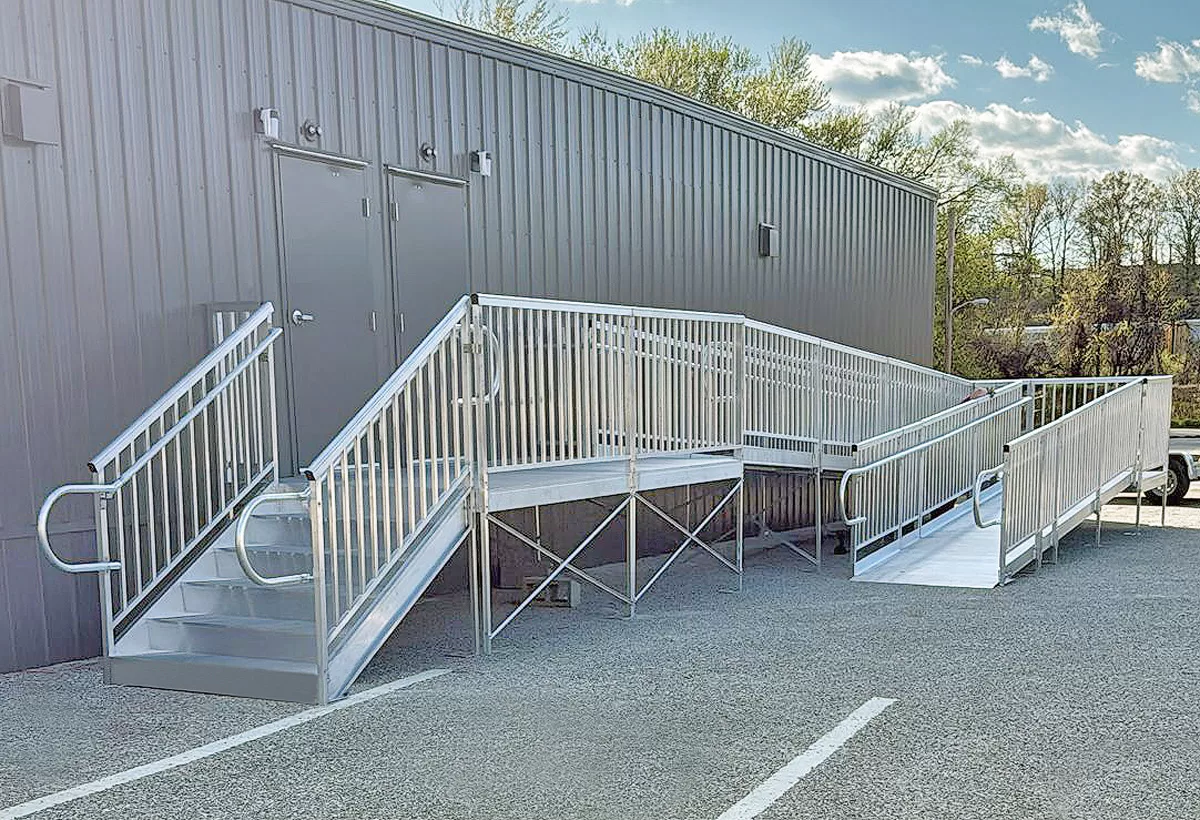
When your commercial project needs an access ramp, your first decisions usually depend on ease of procurement. In that context, prefabricated commercial ramps with a modular design represent a different delivery model; one that can shorten lead times, simplify planning and help projects move faster from quote to installation. In the latest learning resource from National Ramp, we compare the various options available.
In the commercial access market, you’ll be considering whether modular commercial ramps will serve your project better than a custom-fabricated or site-built alternative in steel, wood or concrete. For many teams we work with, the answer comes down to how quickly the system can be installed, how reliably it can support compliance and how much maintenance it requires over time.
Before comparing materials, it helps to look at the same set of practical questions for each option. If you haven’t raised these questions, give them some thought:
- How long will it take to get your ramp installed?
- How difficult will the installation process be?
- How much maintenance will it require over time?
- How easily can it support a code-aware access route?
- What does your material choice mean for long-term value?
If you haven’t got answers to these questions, this resource is a great place to get started.
What “Prefabricated” Means in Commercial Access
In commercial access, ‘prefabricated’ doesn’t equate to ‘light-duty’ or ‘temporary’. Rather, it means your ramp system will be built from pre-engineered structural components, designed to work together and configure to your site.
That changes your delivery path immediately: a prefabricated modular system removes the need to fabricate every piece from scratch, shortening the time you can expect to wait between scoping your job and putting your ramp in place.
This distinction is important to note during your procurement process – particularly because matters buyers often hear “modular” and assume “short-term.” In practice, prefabricated aluminum ramps can be structural, heavy-duty and fully suitable for permanent commercial use.
While reconfigurability is still a valuable feature, it’s not the only reason to choose the system. The bigger advantage here is that prefabrication gives you a faster, cleaner route through procurement, planning and installation.
Prefabricated Aluminum: Stocked, Structural, and Ready to Ship
For many commercial projects, prefabricated aluminum ramps offer the clearest path to fast, dependable access. Pre-engineered, structural and ready to configure, these systems are available and in-stock without waiting on a full fabrication cycle. That alone gives you a major scheduling advantage over custom steel, wood or concrete alternatives.
They also perform well after installation. This material doesn’t carry the same corrosion concerns as steel, it doesn’t rot like wood, and it doesn’t pose the curing time or site disruption that often comes with poured concrete. If you’re comparing commercial access ramps across different materials, that combination of speed and lower maintenance often makes prefabricated aluminum your most practical choice.
Here at National Ramp, our commercial systems are built around that model. We keep in-stock inventory, provide quote packets & CAD drawings within hours and move many jobs from start to finish within days of the project being approved. For teams under pressure, that makes prefabricated aluminum ramps for commercial buildings a strong procurement option as well as a strong access solution.
Custom Steel Ramps: When Fabrication Delay Becomes a Project Risk
Steel can work on some commercial projects, particularly where a buyer wants a specific visual finish or needs the ramp to align with a wider fabricated steel package. Even so, steel often brings more drawbacks than advantages when speed, upkeep and day-to-day durability are high priorities.
The biggest drawback is usually around time. Steel fabrication adds another stage to your project, which can often slow procurement and extend delivery. On top of that, steel tends to demand more attention over its lifespan. Once coatings are damaged or wear begins to show, ongoing maintenance becomes a more serious concern, especially in outdoor environments or heavily used commercial settings where stairs, walkways and ramps face heavy usage.
In an aluminum vs steel ramps commercial comparison, steel may offer design flexibility, though it often comes with a slower path to installation, a heavier maintenance burden and more exposure to long-term wear. For many commercial buyers, that makes aluminum the more practical choice when schedule, durability and ease of ownership all matter.
Wood Ramps: Lower Upfront Cost, Higher Long-Term Burden
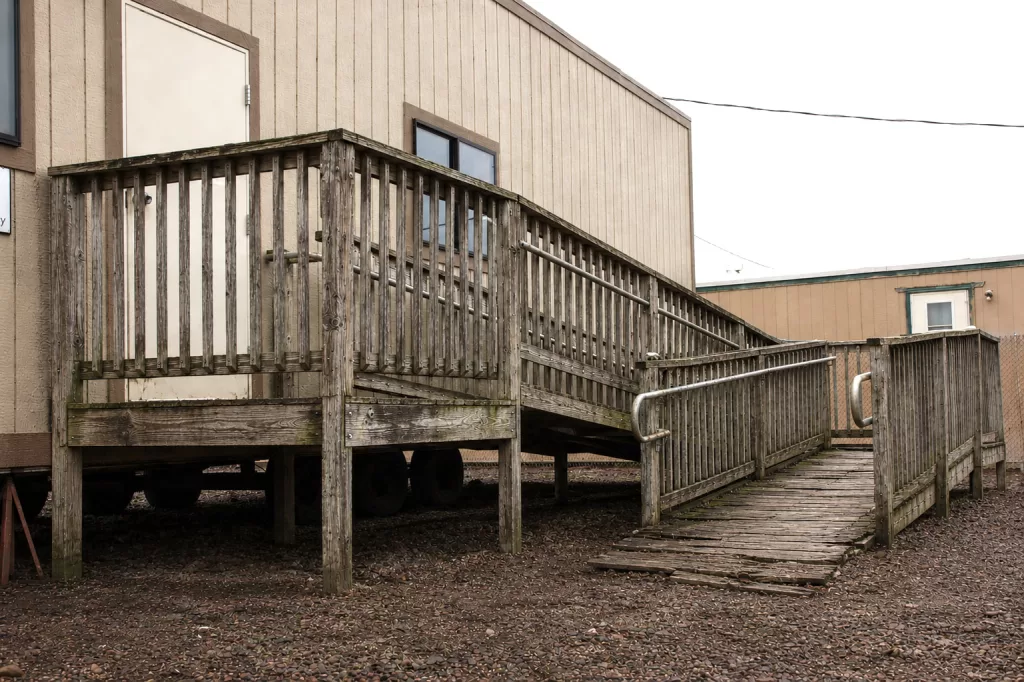
Wood ramps can look appealing at the start because the material cost may seem lower and the construction method is familiar to many teams.
However, in commercial applications that lower entry cost often gives way to a heavier maintenance burden over time. Exposure to weather, ongoing wear and the demands of regular use can make wood a more demanding option than it first appears. Common long-term drawbacks include:
- Higher maintenance demands to keep the ramp safe and presentable
- Greater exposure to rot, warping, splintering and surface wear
- More frequent repair or replacement needs in high-use environments
- Less predictable long-term performance in outdoor commercial settings
Considering these drawbacks is critical in scenarios where your ramp is part of a public-facing or heavily used environment.
Those drawbacks become more serious when the ramp is part of a public-facing or heavily used environment. Buyers looking for ADA compliant commercial ramps need durability, consistency and a finish that can hold up under regular use. Wood may look attractive on upfront spend, though it often becomes one of the weakest long-term choices once maintenance, reliability, and service life are taken into account.
Concrete Ramps: Permanent But Inflexible
Concrete ramps offer permanence, though they can be one of the slowest and least adaptable routes to commercial access. Site preparation, formwork, truck access, curing time and disruption to surrounding operations all add weight to the schedule. On many sites, simply getting concrete trucks in and out can be a challenge, and once the pour is complete, curing can take days. That’s a significant drawback when timelines are limited.
Concrete also gives project teams very little flexibility once it’s in place. If the site changes, circulation evolves or the access route needs to be adjusted later, a poured concrete ramp can be difficult and expensive to modify.
For teams evaluating prefab vs custom ramp for business use, that lack of adaptability can carry just as much weight as the slower installation timeline.
Considering The Reconfigurability Advantage
Reconfigurability isn’t the only reason to choose prefabrication, although it should be noted as a genuine long-term benefit.
Sites change. Tenants change. Circulation routes shift. A prefabricated aluminum system gives owners and your project teams more flexibility if layouts need to be adjusted later. This benefit is significant in phased developments, evolving facilities or sites where access needs may expand over time.
A poured concrete ramp or site-built wood structure cannot offer the same level of adaptability once the work is complete. For long-term commercial use, that flexibility adds another layer of value to prefabricated commercial ramps.
Prefabricated vs Custom Commercial Ramps: FAQs
A prefabricated commercial ramp is a structural access system built from pre-engineered components. For commercial projects, that usually means a faster path to installation, fewer delays tied to site-built construction and a more dependable route through procurement and installation than steel, wood or concrete alternatives.
They can be, though final compliance depends on your layout, slope, landings, handrails, and site application. The U.S. Access Board’s guidance outlines the technical requirements that need to be addressed in ramp design. For more guidance on compliance, see our Compliance Codes toolkit.
Aluminum usually offers faster lead times, lower maintenance, and stronger corrosion resistance. Steel can suit some custom applications, though fabrication often adds time and long-term upkeep can become a bigger issue once coatings are damaged or the system is exposed to weather and heavy commercial use.
Wood usually brings higher maintenance over time and tends to wear faster in heavily used commercial settings. Concrete is far less flexible, can be difficult to coordinate on sites where truck access is limited and curing time can stretch into days.
That depends on your site conditions and documentation needs, though prefabricated systems usually move faster than custom-built alternatives because they’re stocked and pre-engineered.
Yes. Reconfigurability is one of the long-term practical advantages of prefabricated aluminum systems.
For many projects, prefabricated aluminum offers the strongest balance of speed, compliance readiness, lower maintenance and durability. Steel often brings longer lead times and more upkeep, wood usually struggles under heavy long-term use and concrete can be slow to install and difficult to adapt once the site changes.
Don’t Risk Injury To You Or A Loved One
Why wait? Give us a call at 877-596-7293 or contact us online to get started!