

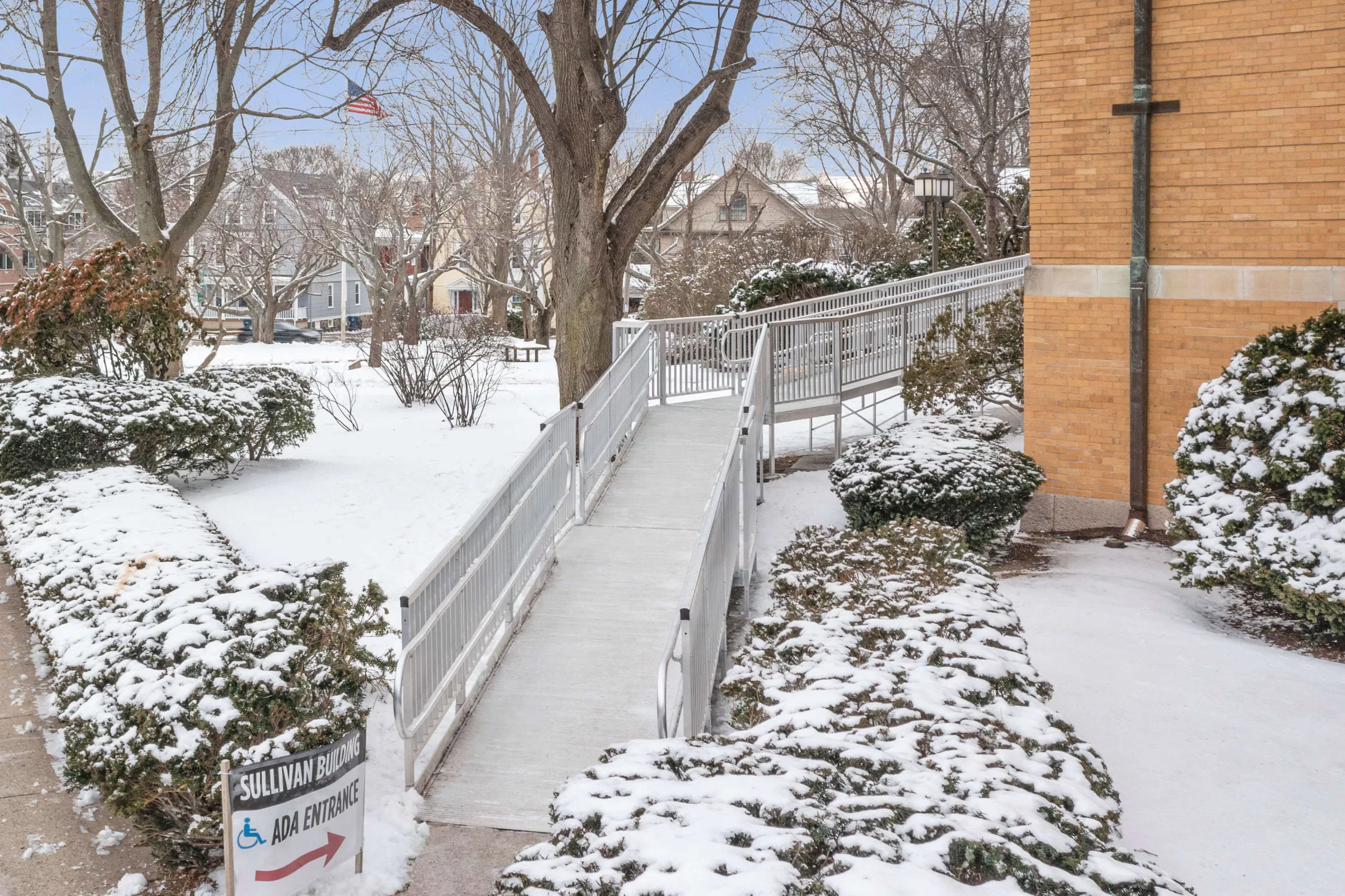
For commercial and public spaces, preparation for the winter months is critical. During snowy and icy weather, the risk of slip-and-fall accidents increases. Maintaining clear, accessible entry points year-round, primarily through proper snow and ice management, not only protects your business, but helps support ADA accessibility requirements during winter conditions.
Winterizing your commercial ramp isn’t difficult, but there are a few things you need to take into account. Don’t forget to check out our handy maintenance checklist at the end!
First Thing’s First: De-Ice Your Wheelchair Ramp
It’s no surprise that ice is the top concern when preparing your ramps for winter, and addressing it is essential for safety. Ice and compacted snow build-up can reduce traction on any walking surface, and even a thin layer of ice can make a ramp slope unsafe. This is especially true for heavier wheelchairs and mobility scooters.
Freeze-thaw cycles pose a significant risk not only to users but also to surrounding surfaces if ice is allowed to accumulate. While commercial aluminum ramps are designed to remain structurally stable and low-maintenance in winter conditions, standing water and repeated icing can still create hazardous conditions if not properly managed.
This is why consistent snow removal and the use of aluminum-safe ice melt products are the foundation of winter ramp safety in commercial settings.
How To Keep Your Ramp – And Your Customers – Safe
Start by choosing a ramp-safe, aluminum-friendly ice melt. We recommend magnesium chloride or calcium magnesium acetate solutions, which are commonly found in pet-friendly ice melts. These products are effective at lower temperatures and help prevent ice buildup without damaging aluminum ramp surfaces.
Unlike rock salt or harsher chloride blends, these solutions work quickly while supporting the long-term durability and traction of aluminum ramps. Once your ramp is clear of ice, routine inspections and prompt snow removal are usually sufficient to maintain safe traction, thanks to the naturally slip-resistant design of commercial aluminum ramp systems.
Temporary traction aids may be used selectively in extreme conditions, but proper ice melt application remains the most reliable and recommended approach.
How Do I Protect My Ramp During Winter?
Wood Ramps
- Be proactive: keep your ramp free from ice and snow to avoid warping and splitting boards.
- Seal wood surfaces with weatherproof coatings and ensure good drainage.
- Use ice melts appropriate for wood surfaces to limit moisture absorption and freeze damage.
Metal Ramps
- Aluminum is corrosion resistant and designed for year-round outdoor use, but should still be paired with aluminum-safe de-icing products.
- Use magnesium chloride or calcium magnesium acetate ice melt to prevent ice buildup while preserving the ramp’s finish and traction.
- Clean your ramp regularly to remove residues and debris that could interfere with drainage or traction.
Winter Checklist for Commercial Wheelchair Ramps and Walkways
Use this checklist to help facility managers and maintenance teams prepare ramps before winter weather sets in.
- Clear snow early to avoid compaction and ice layers: Removing snow promptly prevents it from turning into slippery ice.
- Reapply aluminum-safe, pet-friendly ice melt as needed: Use magnesium chloride or calcium magnesium acetate solutions for effective, ramp-safe de-icing.
- Inspect ramp surfaces regularly: Ensure traction areas are clear and free from standing water or debris.
- Monitor wooden ramps for soft spots or swelling: Inspect regularly to catch early signs of damage before it becomes a safety hazard.
- Inspect handrails and fasteners: Check for loose bolts or wobbly rails before the cold season begins.
- Remove debris from drainage paths: Ensure ramp edges and surrounding areas are free from leaves, dirt, and snow remnants.
- Prepare ahead of winter storms: Stock approved ice melt products and establish a snow removal plan for quick response.
Download Winter Checklist for Commercial Wheelchair Ramps and Walkways
Frequently Asked Questions
The safest options are magnesium chloride or calcium magnesium acetate, which are aluminum-safe, effective in low temperatures, and commonly found in pet-friendly ice melt products.
The most effective approach is consistent snow removal combined with the use of aluminum-safe ice melt products. This helps prevent ice buildup while maintaining the ramp’s built-in traction.
Yes. Commercial aluminum ramps are designed with high-traction surfaces and require minimal maintenance, making them well suited for winter conditions when properly cleared and treated.
For wood ramps, keep surfaces sealed, clear snow promptly, and use appropriate ice melt products. For metal ramps, avoid harsh salts and use magnesium chloride or calcium magnesium acetate, and maintain clear drainage around the ramp.
Facility managers should inspect handrails and fasteners, clear drainage paths, stock aluminum-safe ice melt, and establish a snow and ice response plan to maintain accessibility throughout winter.
Don’t Risk Injury To You Or A Loved One
Why wait? Give us a call at 877-596-7293 or contact us online to get started!